
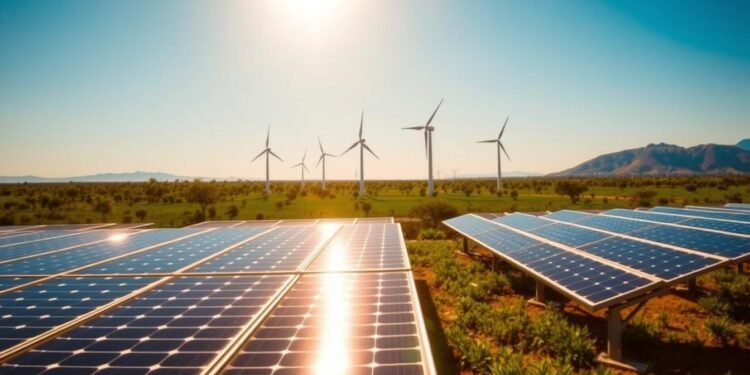
What if the key to a sustainable global power grid isn’t found in the developed world, but is being built right now across a continent with immense untapped resources?
As the world’s energy landscape changes, this region is fast becoming a powerhouse of clean power. Its immense potential is set to define the coming decades.
A stark challenge remains. In 2024, about 600 million people here, roughly 40 percent of the total population, lived without reliable electricity.
A remarkable transformation is underway. Significant policy shifts and tech advances are driving a renewable revolution. Stakeholders are now working hard to bridge this critical gap in power generation.
By harnessing abundant sun, wind, and water, the area is positioning itself at the heart of the worldwide shift to cleaner systems. This move supports long-term sustainable development.
This vast market is drawing increasing attention. Backers are looking to fund projects that promise strong economic growth and lasting environmental care for its people.
Key Takeaways
- The continent holds massive potential for clean power generation that will impact the global market.
- Despite progress, a large portion of the population still lacks access to reliable electricity.
- Policy changes and technological improvements are accelerating a major shift toward sustainable sources.
- Natural resources like solar and wind are central to the region’s role in the worldwide transition.
- Financial support is growing for projects that aim to deliver both economic and environmental benefits.
- Bridging the electricity access gap is a primary focus for developers and governments.
- This evolution presents significant opportunities for sustainable development and international partnership.
Current Landscape of Africa’s Renewable Energy Market
Today’s power generation scene is undergoing a profound transformation. Technology and policy are unlocking sustainable sources. A massive need for electricity defines this landscape. About 600 million individuals, roughly 40 percent of the total population, lacked basic access in 2024.
Policy Reforms and Regulatory Frameworks
Governments are actively revising their frameworks to incentivize cleaner power. Nations like South Africa and Egypt are leading with more transparent rules. These changes aim to attract vital capital for project development. They recognize that a large portion of people remain underserved by traditional grids.
Technological Innovations and Resource Potential
Tech advances have made solar power the most affordable source in many areas. This significantly boosts the region’s potential. Developers are using abundant natural assets to integrate smart grid solutions. These enhance supply reliability for underserved communities. The focus is on harnessing sun and wind to build a resilient system.
Africa renewable energy investment Opportunities Across the Continent
Several nations are emerging as prime destinations for capital seeking to build clean power infrastructure. These markets offer diverse resources and established frameworks for large-scale development.
Top Markets: South Africa, Egypt, Morocco, and Kenya
South Africa leads in installed capacity, accounting for roughly 17% of the continent’s total. Its successful procurement programs continue to attract major projects.
Morocco hosts the Noor Ouarzazate Solar Complex, a global benchmark for concentrated solar power. The nation is a recognized leader in solar and wind initiatives.
Kenya has achieved remarkable success with geothermal sources. It now provides nearly 1 gigawatt of reliable power access from this stable resource.
Algeria is advancing its goals with the massive Tafouk 1 Mega Solar Project. This initiative represents a $3.6 billion commitment to sustainable development.
Developers find these four countries offer the most stable environments. Supportive regulations and abundant natural resources make them attractive for long-term projects.
Key Drivers and Challenges in Renewable Energy Projects
A surge in capital flows is transforming the market, yet developers face critical tests in infrastructure and finance. Private sector commitment to clean power has more than doubled since 2019.
This growth highlights strong confidence in the sector’s future. However, real-world hurdles can slow progress significantly.
Infrastructure Limitations and Financing Barriers
Outdated transmission networks often struggle to integrate new installations. This creates a primary bottleneck for expanding reliable power access.
Developers must navigate complex financing barriers to secure long-term viability. Investors now scrutinize the robustness of off-take agreements very closely.
Nations like Namibia leverage their abundant solar and wind resources to drive change. The country is actively working toward its 2050 net-zero emissions goal.
Global transition mandates push institutional backers to seek high-impact opportunities. These ventures must align with strict ESG and sustainability targets to attract capital.
Innovative Financing Models and Stakeholder Strategies
To bridge the financing gap, developers are turning to blended capital structures and deep community involvement. These approaches are essential for deploying large-scale clean power systems.
Blended Finance and Capital Mobilization
Blended finance models mix public and private funds to reduce risk. This method attracts capital for early-stage ventures.
The Accelerated Partnership for Renewables in Africa (APRA) aims to mobilize USD 100 billion. Such initiatives are critical for the global energy transition.
These strategies help unlock projects in markets where private funding alone falls short.
Effective Community Engagement and Risk Mitigation
Maintaining trust with local stakeholders is vital. Regular engagement sessions, like those in South Africa, build lasting partnerships.
Experts like ERM partner Stephanie Gopaul bring 18 years of experience. They navigate complex stakeholder landscapes for successful project delivery.
Integrating technical checks with robust risk plans meets high standards. This ensures projects gain support from international partners.
Conclusion
This journey toward energy independence and sustainability has reached a critical inflection point with far-reaching implications. The rapid evolution of the power landscape across the continent demonstrates its emerging role as a global leader in the clean transition.
Addressing persistent electricity access gaps requires sustained collaboration. International partners and local stakeholders must continue working together to ensure long-term project success.
As more installations become operational, maintaining focus on resilient infrastructure is crucial. This supports the growing power needs of populations while advancing development goals.
The commitment to sustainable sources represents a fundamental shift, not a passing trend. It will help define the future of the world’s power markets.
By prioritizing transparent engagement and innovative financing approaches, the region can overcome remaining barriers. This will unlock its full potential for generation capacity and economic growth.