
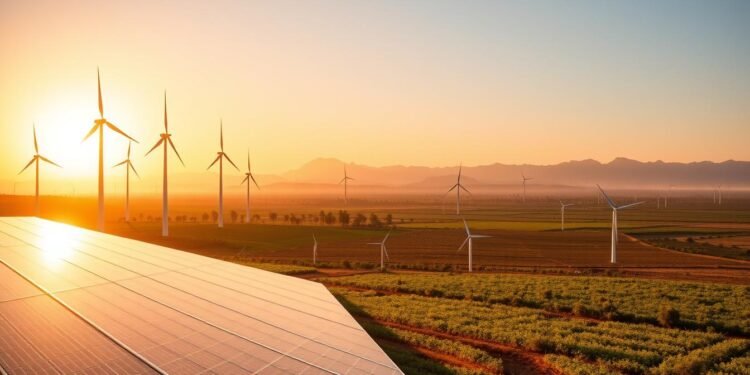
What if the key to powering a continent’s future was already shining down on it every day?
This isn’t just a thought experiment. In 2024, over 600 million people across the continent lived without reliable electricity. This gap represents a profound challenge but also an unprecedented opportunity.
The region possesses some of the planet’s most abundant solar and wind resources. Tapping into this clean power is not just about lights turning on. It’s about fueling long-term economic growth and sustainable development.
Our analysis looks at how this vast potential is starting to be unlocked. We examine the landscape for stakeholders and developers. The goal is to expand access for millions while shaping a cleaner global energy future.
Understanding the current state is critical. This report provides a comprehensive view of the challenges and opportunities that define this dynamic sector.
Key Takeaways
- A significant portion of the continent’s population still lacks access to reliable electricity, highlighting a major development gap.
- Solar and wind resources across the region are exceptionally abundant, representing a massive untapped opportunity.
- Harnessing this sustainable power is directly linked to driving future economic growth and meeting development goals.
- The sector presents a complex mix of challenges and opportunities for investors and project developers.
- Expanding clean energy access is a pivotal part of the global transition towards more sustainable power systems.
- Actionable insights are needed to navigate this market and contribute to large-scale electrification efforts.
Introduction to the African Renewable Energy Sector
Modern solutions are emerging to address the long-standing challenge of electricity availability. In 2024, around 600 million individuals, or 40% of the total population, still did not have reliable power connections. This gap highlights a critical development priority for the continent.
Overview of Renewable Energy Trends in Africa
The sector is witnessing rapid growth in solar and wind installations. Sustainable power is now the most cost-effective power source in many areas. This trend provides a viable path to bridge the existing gap.
Decentralized systems are bringing electricity to remote communities. Technological advances continue to drive down costs. The focus is on scalable projects that deliver tangible benefits.
Clean Energy Investment and Economic Growth
Private sector funding has more than doubled since 2019. It rose from USD 17 billion to nearly USD 40 billion in 2024. This surge reflects strong confidence in the region’s potential.
We view this as a pivotal moment for stakeholders to foster sustainable economic growth. Increased capital flows directly support infrastructure development. It also strengthens the global shift towards cleaner power systems.
Driving Forces Behind Renewable Energy Developments
A dual engine of falling costs and supportive regulations is propelling the growth of sustainable power projects. This powerful combination is reshaping the sector’s landscape.
Solar, Wind, and Hydropower: Cost-Effective Solutions
Solar, wind, and hydropower have emerged as the most affordable sources for electricity generation. They dramatically reduce dependence on traditional fossil fuels.
Falling technology costs make these options highly competitive. Integration into national grids is accelerating across the region.
Strategic development of these resources is essential. It meets rising demand for reliable power while cutting carbon emissions.
Policy Reforms and Market Confidence
Policy reforms in key countries have bolstered market confidence. Developers can now scale initiatives with greater regulatory certainty.
These changes create a more stable environment for large-scale project deployment. Long-term planning becomes feasible, attracting further capital.
This confidence is a fundamental driver for the continent’s clean power transition. It unlocks the potential for widespread electrification.
Strategies for Successful Africa renewable energy investment
Navigating the complexities of sustainable power development requires more than just capital. It demands strategic insight and on-the-ground knowledge.
Professionals like Stephanie Gopaul, an ERM partner with eighteen years in capital project delivery, help teams understand the socio-political landscape. This deep local experience is invaluable for any major initiative.
Risk Management and Off-take Agreement Best Practices
Understanding local regulatory risks is the first step. Developers must secure bankable power purchase agreements with creditworthy partners.
These contracts are the foundation for a viable project. Using insurance and guarantees helps secure necessary financing.
This approach mitigates financial and operational uncertainties. It protects the long-term health of the asset.
Leveraging Local Expertise to Navigate Regulatory Landscapes
Building strong relationships with community and government stakeholders is non-negotiable. These connections provide critical market intelligence.
Developers with extensive regional knowledge handle unique market challenges more effectively. They ensure smoother approvals and sustained operations.
This focus on local partnership is a key strategy for success. It turns potential risks into managed aspects of the project lifecycle.
Regional Trends and Investment Hotspots
The landscape for sustainable power is not uniform, with certain nations emerging as clear leaders. Activity and capital are clustering in specific geographic areas. These hotspots demonstrate proven models for others to follow.
Success Stories in South Africa, Egypt, Morocco, and Kenya
South Africa accounts for roughly 17% of the continent’s total installed capacity. This is largely due to its successful Renewable Energy Independent Power Producer Procurement Programme.
Morocco hosts the Noor Ouarzazate Solar Complex. It is one of the largest concentrated solar power plants worldwide. Egypt is also advancing major solar and wind initiatives.
Kenya leads in geothermal power. It boasts nearly 1 gigawatt of installed capacity, ranking seventh globally.
Emerging Markets: Rwanda, Tunisia, and Algeria
New frontiers are gaining momentum. Algeria’s Tafouk 1 Mega Solar Project aims to deliver 4 GW of solar power. It has attracted significant international investors.
Rwanda pioneers decentralized solar mini-grids for rural communities. Tunisia leverages its wind resources and hydropower potential.
These countries are diversifying their mix. They offer fresh avenues for development and growth.
Regulatory and Policy Influences on Renewable Energy Projects
Policy decisions create the foundation upon which large-scale sustainable infrastructure rises or stalls. The rules of the game determine where capital flows and how quickly new capacity can be built.
Impact of Government Policies on Investor Confidence
Clear regulatory frameworks are a powerful signal to the market. Nations with transparent processes, like South Africa and Egypt, have seen a major boost in confidence.
These systems reduce uncertainty for teams planning a new venture. They make long-term planning possible.
Guaranteed purchase agreements are another key tool. They help lower the financial risk for a new power project. This makes the asset more bankable from the start.
Stable policies directly attract the capital needed for development. They allow nations to build the clean power capacity required for growth. Consistent implementation across different countries maintains momentum for the entire sector.
Blended Financing Models and Capital Innovation
Blending different types of capital is unlocking projects that were once considered too risky or unprofitable. This approach is essential for building large-scale sustainable power assets.
Traditional commercial funding often falls short for major infrastructure in developing markets. New models combine public and private sources to bridge the gap.
Role of DFIs and Private Equity in Renewable Projects
Development finance institutions provide crucial anchor capital. Their participation signals stability and attracts other investors.
Private equity firms bring commercial discipline and growth expertise. Together, they make a project more bankable from the start.
Funds like the Africa Renewable Energy Fund offer direct funding. This support is vital for solar, wind, and geothermal development.
Opportunities in Blended Finance for Infrastructure Development
Blended finance structures de-risk ventures for private partners. Using tools from institutions like the Sustainable Energy Fund for Africa is key.
This method turns marginal infrastructure opportunities into viable investments. It enables the construction of critical assets that fuel economic growth.
Success requires clear alignment between all partners. Shared goals ensure the long-term health of these essential investments.
Community Engagement and Social License to Operate
Without local support, even the most technically sound project can face significant hurdles. Earning a social license is fundamental for sustainable infrastructure development.
Best Practices for Stakeholder Engagement
Structured engagement, like monthly sessions, maintains trust during construction. Digital tools track metrics to update stakeholder registers accurately.
These platforms use cookies to process data. This enhances our view of community needs and supports informed decisions.
Building Trust with Local Communities
Transparency builds lasting relationships and reduces operational risks. Consistent dialogue lets community concerns shape the initiative.
This approach fosters genuine support. It strengthens the social capacity for long-term project success.
Innovations and Future Outlook in Africa’s Energy Transition
Advancements in storage and grid design are unlocking the next wave of electrification. The focus is shifting toward smarter, more resilient systems.
Technological Advances in Renewable Energy Solutions
Battery technology is a game-changer. It allows sustainable power to be delivered reliably, even when the sun isn’t shining or the wind isn’t blowing.
These storage solutions are now a critical part of the infrastructure. They support the growing demand for clean energy access across communities.
The Promise of Decentralized and Off-grid Systems
Decentralized models bypass the need for extensive traditional grid construction. They provide immediate power to remote areas.
Initiatives like the Africa Renewable Energy Fund show this model’s impact. Their work supports significant yearly reductions in carbon emissions.
Our report finds that developers integrating storage into their projects will lead the evolving market. This combination is the key driver for the next phase of development and attracts crucial funding.
Conclusion
The journey toward a brighter, electrified future is now firmly underway. This transformation is providing essential access to electricity for millions.
For developers and the private sector, success hinges on robust project design, genuine community ties, and innovative finance. This approach manages inherent risks and captures a major economic opportunity.
Sustaining this momentum requires continued commitment. Building critical infrastructure and local capacity is vital for the long-term transition.
This report underscores the complex, rewarding nature of this market. We provide the insights investors and teams need to navigate it successfully and power lasting growth.