
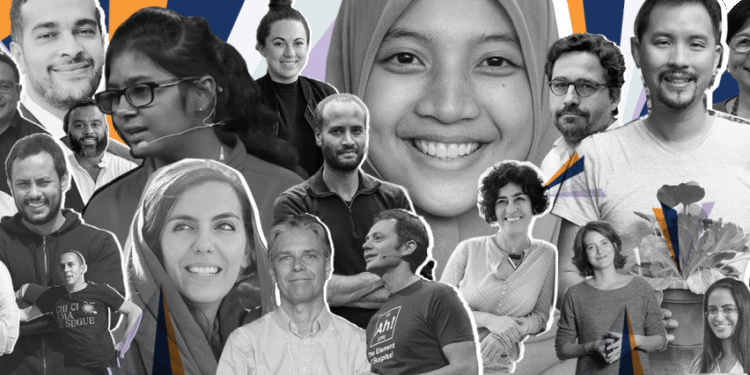
When we look at the Ashoka Venture and Fellowship program, we are not just looking at another nonprofit initiative. We are looking at a global engine designed to find people with bold social ideas, test whether those ideas can truly reshape a field, and then surround those changemakers with long-term support.
On Ashoka’s official program pages, the organization explains that it has spent more than 40 years building what it describes as the largest network of leading social entrepreneurs in the world, and that selected candidates enter a lifelong fellowship built around the vision of “Everyone a Changemaker.”
What makes this especially compelling is that Ashoka does not treat entrepreneurship as a business-only concept. Instead, it applies entrepreneurial thinking to social problems: inequality, exclusion, education, health, energy, civic life, and more. In that sense, Ashoka’s model works like a bridge. On one side, we have people with unusual courage and imagination. On the other, we have systems that desperately need redesign. Venture and Fellowship is the structure that helps those two sides meet.
What Is the Ashoka Venture and Fellowship Program?
At its core, the Ashoka Venture and Fellowship program is the part of Ashoka that searches for, evaluates, selects, and supports top social entrepreneurs. The main Venture and Fellowship page explains that after a rigorous selection process, Fellows enter a lifelong fellowship where they are encouraged to co-create social good and help advance Ashoka’s broader mission. Ashoka also frames its Fellows as people who do more than launch projects. They create new patterns that can transform society itself.
That is a major distinction. Many organizations fund programs. Ashoka backs people. Many institutions reward service delivery. Ashoka looks for system change. It wants to know whether a person’s idea can spread, influence norms, alter institutions, and improve life at scale. So when we read the Venture and Fellowship pages carefully, we see that the real product here is not a grant cycle. It is a long-range platform for social transformation.
Why Ashoka Says Leading Social Entrepreneurs Matter More Than Ever
Ashoka’s official language is very clear: in a world defined by constant change, leading social entrepreneurs create new roadmaps that help people thrive while also showing others how change can happen. The organization says its Fellows develop ideas that transform systems, improve lives, and often benefit millions of people.
That matters because social problems today rarely sit in tidy boxes. Poverty overlaps with health. Education intersects with technology. Climate touches housing, work, and migration. Traditional institutions often move like heavy ships in rough water. Social entrepreneurs, by contrast, can move more like speedboats. They test, adapt, learn fast, and chart new routes. Ashoka’s bet is that the people capable of this kind of leadership are essential if we want durable social progress rather than short bursts of charity.
Ashoka’s Scale: A Truly Global Fellowship
The Venture selection page states that Ashoka has built a network of more than 3,800 Fellows across more than 95 countries. That scale matters for two reasons. First, it shows that Ashoka is not operating from one national lens. Second, it means Fellows do not enter a lonely program; they enter a global peer network.
A network like that is not just decorative. It acts like social infrastructure. When one Fellow discovers a better way to shift policy, organize communities, build financing tools, or change institutional behavior, those lessons can travel. A strong idea in one country can become a useful signal in another. That is part of why Ashoka keeps emphasizing a trust-based fellowship of peers rather than a one-time award.
How the Venture Side Works
The “Venture” part of the program is where Ashoka identifies potential Fellows. Ashoka describes this as an intensive, human-centered process built to search the world for leading social entrepreneurs. The process is not limited to internal scouting either. Nominations can come from staff, volunteers, partners, existing Fellows, and external nominators, and Ashoka also accepts self-nominations from social entrepreneurs who believe they meet the criteria.
That is an important design choice. It means Ashoka does not rely on polished insiders alone. It leaves the door open for people who may be doing transformative work outside elite circles. In social change, some of the strongest ideas grow far from the spotlight. Ashoka’s nomination model is built to catch those signals before they are obvious to everyone else.
The Five Selection Phases
Ashoka lists five stages in its selection process:
- Nomination
- First Opinion
- Second Opinion
- Panel
- Board Review
This sequence is one of the reasons the program stands out. It is not a quick online application followed by a yes or no email. It is layered, deliberate, and intentionally designed to reduce weak signals and strengthen good judgment.
Nomination: The Starting Gate
Ashoka says nominations are assessed against the Fellowship’s five criteria from the very beginning. In other words, the process starts with fit, not with buzz. That filters out ideas that sound inspiring but do not yet show the shape of system-level change.
First Opinion: Local Context Matters
In the First Opinion stage, the local Venture team reviews the nomination, conducts site visits, meets the candidate, and consults experts in the field. This matters because social innovation cannot be judged only from a distance. Context matters. Local institutions, community dynamics, and field realities all shape whether an idea is truly transformative or merely attractive on paper.
Second Opinion: Built-In Objectivity
Ashoka says the Second Opinion reviewer is a senior representative with deep experience in social entrepreneurship, and that this person always comes from a different continent than the candidate. The goal is to bring objectivity and to test whether the idea has relevance beyond its local setting.
That is a smart move. It asks a hard but necessary question: can this idea travel? Not always literally, but conceptually. Can the underlying logic inspire change elsewhere? Great system-change ideas often carry a local accent and a universal grammar. Ashoka seems to be looking for exactly that combination.
Panel Review: Peer Scrutiny
Ashoka explains that three to four leading social or business entrepreneurs from the same country or region interview the candidate and then decide by consensus whether to recommend them to the Ashoka board. This is peer evaluation at a high level, grounded in the local reality of implementation and impact.
Board Review: Final Election
Finally, Ashoka’s Board of Directors reviews the case using input from the local team, the Second Opinion interviewer, and panelists before making the final decision. That gives the process both depth and institutional accountability.
The Five Criteria for Becoming an Ashoka Fellow
Ashoka says every Fellowship candidate is evaluated against five criteria throughout the process. These criteria are the backbone of the program. They are not random checkpoints; they define what Ashoka believes makes a leading social entrepreneur.
1. A New Idea
Ashoka looks for a truly new solution or approach to a social problem, one with the potential to change the pattern in a field. The organization explicitly says it is not looking for small tweaks. It wants transformational innovation.
2. Creativity
Ashoka also examines whether the candidate is creative as both a visionary and a practical problem solver. This is not creativity in the decorative sense. It is creativity under pressure: the ability to imagine a better system and engineer a path toward it.
3. Entrepreneurial Quality
The selection page emphasizes that successful candidates are deeply driven to solve the problem they are working on and are willing to tackle endless practical “how-to” challenges. Ashoka is looking for builders, not just thinkers.
Why This Criterion Is So Important
Lots of people can describe what is broken. Fewer can build what should replace it. Entrepreneurial quality is the muscle that turns vision into movement. Without it, a great idea stays trapped in presentation slides and conference panels.
4. Social Impact Potential
Ashoka says the idea must have the potential to change the field significantly and trigger nationwide impact. The solution must be practical and adoptable enough to become a new norm across the sector.
5. Ethical Fiber
Ashoka insists that each candidate be assessed for ethical fiber because major structural change requires trust across multiple stakeholder groups. That makes perfect sense. If an entrepreneur cannot build trust, broad social adoption becomes much harder.
The Selection Process Is Also a Development Process
One of the most interesting things on Ashoka’s Venture page is that the organization does not describe selection as a mere filter. It calls the process transformative and enlightening. Candidates articulate their innovations, test their assumptions, examine strategies, and reflect on themselves as leaders.
That means the process itself has value, even before final election. It sharpens thinking. It stress-tests the logic of change. It helps candidates move from instinct to clarity. We could compare it to tempering steel: the heat is not there to destroy the material, but to strengthen it. Ashoka appears to treat selection as part evaluation, part leadership development.
What Happens After Selection? The Ashoka Fellowship
Once selected, candidates become Ashoka Fellows. On the Fellowship page, Ashoka describes Fellows as leading social entrepreneurs whose ideas transform systems, benefit everyone, and improve the lives of millions. It also says each Fellow begins a tailored timeline of investments and support over their lifetime.
That phrase matters: tailored timeline. Ashoka is not promising identical support for everyone. Instead, it says it adapts its brand, relationships, opportunities, and connections to each Fellow’s needs and stage of work. In a world obsessed with standardization, that is refreshing. Social change is not a factory line. It is closer to gardening. Different seeds need different care.
Core Benefits Fellows Receive
Ashoka lists several kinds of support that Fellows may receive:
- A tailored stipend for up to three years, if needed, so the Fellow can work full time on advancing the idea
- Customized engagement opportunities to accelerate impact
- Increased visibility
- Access to a global community of peers
This package tells us a lot about Ashoka’s theory of change. It understands that system-shifting work needs more than applause. It needs time, legitimacy, relationships, and sometimes money. Remove the financial pressure, increase the social proof, and connect a leader to the right peers, and the odds of durable impact rise sharply.
Why the Stipend Matters More Than It Looks
The Fellowship page says Fellows may receive a tailored stipend for up to three years if needed. A 2025 Ashoka story adds useful context: through a partnership with IKEA Social Entrepreneurship, some newly selected Fellows were able to focus on their ideas full time thanks to a three-year living stipend.
This is huge. Social innovation often dies in the gap between conviction and survival. People with breakthrough ideas still need to pay rent, support families, and manage uncertainty. A stipend is not just financial relief. It is strategic oxygen. It gives a founder the breathing room to move from part-time passion to full-time execution.
Examples of the Kinds of Fellows Ashoka Supports
The 2025 Ashoka story on fellowship stipends gives a glimpse into the diversity of work Ashoka supports. It highlights Fellows working on inclusive energy transition, anti-racist communication, Roma inclusion, cooperative recycling systems, and youth-led rural economic transformation. These examples show that Ashoka is not tied to one sector; it is tied to a pattern: innovative people redesigning systems so excluded communities gain more power, access, and dignity.
That diversity is a strength. It means the Fellowship is not trapped by a single trend. One year’s hottest buzzword does not define the network. What defines it is whether an entrepreneur is building something that can shift the rules of the game.
Ashoka’s Values: Inclusion, Equity, and Systemic Change
The Venture selection page explicitly says Ashoka envisions a world free of systemic oppression where everyone has access to resources, self-expression, power, and safety. It also names structural, institutional, and historical barriers faced by marginalized communities and says Ashoka is committed to making these barriers visible and shifting how society is organized.
This matters because it tells us the Fellowship is not ideologically neutral in the shallow sense of “anything goes.” Ashoka is clear that it wants system change that expands fairness and human possibility. In practical terms, that shapes what kinds of innovations it is likely to value: not just efficient ideas, but equitable ones.
The Role of Network Effects in the Ashoka Model
Ashoka repeatedly emphasizes community, peers, and co-creation. The Fellowship page says Fellows gain a global community of peers, while the Venture page describes the Fellowship as trust-based. The main program page adds that Ashoka encourages Fellows to take ownership of the network itself.
That is powerful because networks multiply impact. A Fellow may enter because of one idea, but over time the value expands through introductions, collaborations, visibility, and pattern recognition. When Ashoka says it studies patterns emerging from Fellows to guide its broader strategies, it is signaling that the network is also a learning system.
A Network That Learns
Ashoka says it identifies patterns across Fellows, including solution types, strategies, and topic areas, and uses those learnings to guide its initiatives and strategies. In other words, the network is not just a collection of biographies. It is an intelligence system for social change.
Partnerships That Extend the Program’s Reach
The main Venture and Fellowship page also points to partnerships that expand Ashoka’s reach. One example on the page is Boehringer Ingelheim, which Ashoka says has worked with it since 2010 to promote innovative health solutions. According to Ashoka, that collaboration supported 75 Making More Health fellows in 47 countries over five years and launched three global competitions that identified more than 800 health innovations.
This shows that the Fellowship model does not sit in a sealed room. It can interact with companies, foundations, and broader ecosystems. When those partnerships are aligned, they can help social entrepreneurs gain resources, legitimacy, and distribution pathways that would be hard to build alone.
Who Should Pay Attention to the Ashoka Venture and Fellowship Program?
This program is especially relevant for four groups.
Social Entrepreneurs
If we are building a bold solution to a major social problem and aiming for system change rather than isolated service delivery, Ashoka’s criteria are worth studying closely. Even before nomination, they provide a strong framework for self-assessment.
Funders and Philanthropic Partners
Ashoka offers a due-diligence-rich model for identifying high-potential social entrepreneurs and supporting them for the long haul. The structured selection process and lifelong support model are both signals of seriousness.
Researchers and Students of Social Innovation
If we want to understand how major social ideas spread, Ashoka’s Fellowship is a fascinating case study in selection design, network effects, and systems thinking.
Anyone Who Wants to Nominate a Changemaker
The program page includes a clear recommendation pathway for people who know someone with a pathbreaking idea. Ashoka is actively inviting that participation.
How to Know Whether Someone Fits Ashoka’s Model
A useful shortcut is this: Ashoka is probably not asking, “Is this person admirable?” It is asking, “Is this person changing the pattern of a field?” That is a much harder test. A strong candidate usually combines five things at once: originality, practical creativity, relentless execution, scalable social impact, and trustworthiness.
So if we are evaluating a founder, organizer, educator, or movement builder, we should look beyond good intentions. Are they redesigning the system itself? Are others likely to adopt the model? Does the work have enough force to become the new normal? Those are the Ashoka-shaped questions.
What Makes Ashoka Venture and Fellowship Different
Many fellowships hand out prestige. Ashoka appears to do something more ambitious. It combines rigorous discovery, deep evaluation, personal development, tailored support, peer connection, and long-term identity. The result is less like a prize and more like a launch platform for systemic changemakers.
That may be the biggest takeaway from the official pages. Ashoka does not simply reward impact after it becomes obvious. It tries to identify the people capable of generating the next wave of social transformation and then helps them keep going. In a world full of short attention spans, that long-horizon approach feels rare and necessary.
Conclusion
The Ashoka Venture and Fellowship program stands out because it blends disciplined selection with patient support. Ashoka searches globally for social entrepreneurs with new ideas, tests those ideas through a multi-stage process, and then brings selected leaders into a lifelong fellowship shaped by stipend support, visibility, tailored engagement, and peer community. More than that, the program is built around system change: not just helping individuals cope with broken structures, but helping changemakers redesign those structures altogether. If we want to understand how social innovation moves from bold idea to lasting pattern, Ashoka Venture and Fellowship is one of the clearest models to study.
FAQs
1. What is the main purpose of Ashoka Venture and Fellowship?
Its purpose is to find leading social entrepreneurs, evaluate them through a rigorous multi-step process, and support selected candidates through the lifelong Ashoka Fellowship.
2. How many Ashoka Fellows are there worldwide?
Ashoka’s Venture page says it has built a network of more than 3,800 Fellows in more than 95 countries.
3. Can people nominate themselves for the Ashoka Fellowship?
Yes. Ashoka says it welcomes self-nominations from social entrepreneurs who believe they meet the Fellowship criteria.
4. What support do Ashoka Fellows receive?
Ashoka says Fellows may receive a tailored stipend for up to three years if needed, customized engagement opportunities, increased visibility, and access to a global community of peers.
5. What does Ashoka look for in a Fellow candidate?
Ashoka evaluates candidates using five criteria: a new idea, creativity, entrepreneurial quality, social impact potential, and ethical fiber.