Morocco’s startup scene just delivered one of those moments that makes us stop and look twice. ZSystems, a Moroccan retail-tech startup focused on modernizing traditional trade, has secured a $1.65 million seed round to keep building its platform and expand into new markets. On the surface, that sounds like another funding headline. But when we look closer, this raise feels much bigger than that. It points to a structural shift in how retail works in Morocco and, potentially, across similar markets in Africa.
The reason is simple. ZSystems is not chasing a flashy consumer app trend. It is tackling a stubborn, deeply rooted commercial problem: traditional retail still moves a massive share of Morocco’s grocery economy, yet much of that value chain remains fragmented, opaque, and lightly digitized. In other words, ZSystems is trying to build roads where the traffic already exists. That is often where durable businesses are born.
A Quick Look at the Funding Round
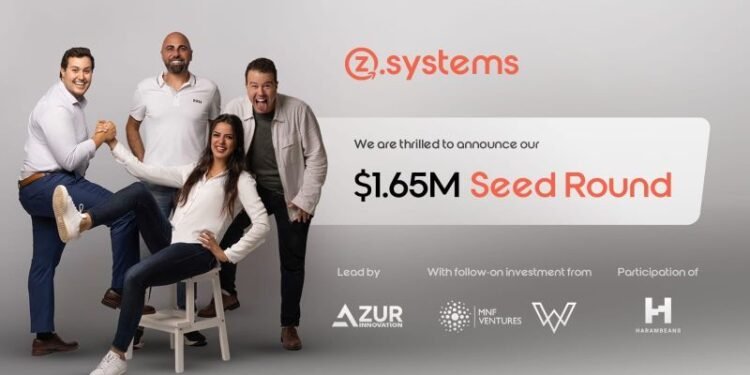
ZSystems announced the close of a $1.65 million Seed round led by Azur Innovation Management, with follow-on participation from MNF Ventures and Witamax, plus new backing from Harambeans Prosperity Fund, which the company described as its first international institutional investor. Company and investor materials say the latest raise brings total funding to $2.7 million.
That matters for two reasons. First, existing investors coming back into the cap table usually signals confidence in execution, not just ambition. Second, adding an international institutional investor suggests the story is beginning to travel beyond local enthusiasm and into broader conviction. In startup language, that is often the moment when a company stops looking merely promising and starts looking investable at scale.
Why This Deal Matters More Than a Typical Funding Announcement
Let us be honest: many startup rounds sound larger than their real-world impact. This one feels different because ZSystems is working inside a market that is already enormous, highly active, and structurally inefficient. According to MNF Ventures, Morocco’s traditional retail market is worth about $40 billion, and the sector is still dominated by roughly 126,000 independent neighborhood shops, often called hanouts. MNF also notes that these outlets account for more than 85% of grocery spend and are connected through a sprawling network of 20,000-plus distributors, wholesalers, and semi-wholesalers.
That picture tells us everything. If modern retail is a well-lit shopping mall with elevators, signage, and digital payments, traditional trade is still a dense old city full of energy but built on narrow streets, memory, phone calls, handwritten notes, and fragmented coordination. ZSystems wants to install the operating system for that city without tearing it down. That is exactly why investors are interested.
The Problem ZSystems Is Trying to Solve
Traditional Trade Is Big, But Coordination Is Weak
Traditional retail in Morocco is not small, marginal, or fading away. It is central. Yet much of the ecosystem still lacks shared digital infrastructure. That means limited visibility across the supply chain, uneven communication between brands and retailers, poor data quality, slow ordering cycles, and weaker commercial intelligence. MNF’s description of the market is blunt: the value chain remains fragmented and largely undigitized.
For retailers, that can mean lost time, stock gaps, fewer growth tools, and limited access to modern services. For brands, it can mean poor field visibility and weaker campaign execution. For distributors and wholesalers, it can mean more friction than flow. When a whole market runs like that, efficiency leaks from every corner.
Digitization Is No Longer Optional
This is why retail digitization is becoming strategic, not cosmetic. Morocco’s Ministry of Industry and Commerce has been pushing initiatives to accelerate commerce digitization, including programs to support startup innovation in retail tech and efforts aimed at the digital transformation of local commerce. The Ministry’s “Moroccan Retail Tech Builder” initiative explicitly aims to help create national champions and accelerate the digitalization of Moroccan commerce.
At the national level, Digital Morocco 2030 was launched with broader ambitions to drive the digital economy, improve public services, and create 240,000 direct jobs by 2030. That does not mean every startup will win. But it does mean companies like ZSystems are rowing with the policy current instead of against it.
What ZSystems Actually Does
A Unified B2B2C Platform
ZSystems describes itself as a platform connecting brands, wholesalers, retailers, and consumers in one integrated ecosystem. Disrupt Africa and MNF Ventures both frame the business as a B2B2C marketplace or digital infrastructure layer for traditional trade. That is an important distinction. ZSystems is not only helping stores buy goods. It is trying to connect multiple actors across the retail value chain through one operating layer.
That model matters because fragmented markets usually do not need just one tool. They need coordination. A retailer might need easy ordering. A brand might need activation tools, campaign tracking, and visibility. A distributor might need cleaner execution. If all three parties use disconnected tools, the market stays messy. If one platform begins to sit in the middle, the network starts to compound.
Tools Beyond Simple Ordering
The company’s public material and sector coverage show that ZSystems is building more than a marketplace. Its product stack includes features for order placement, inventory and product tracking, loyalty mechanics, brand activation, and commercial intelligence. Public descriptions also emphasize digital services that help retailers boost profits, retain customers, and interact more directly with brands and suppliers.
That is where the model becomes interesting. Ordering is useful, but it can be copied. Data, loyalty, repeat behavior, and operational visibility create stronger moats. If ZSystems becomes the place where retailers order, brands activate, and market intelligence accumulates, then the platform gets smarter with every transaction. That is not just software. That is infrastructure.
Why the Asset-Light Angle Matters
MNF Ventures highlighted the company’s disciplined and capital-efficient approach, especially in a category where operational intensity can crush startups. That is a subtle but powerful point. Retail-tech businesses often die not because the market is too small, but because logistics, sales execution, and working-capital demands become too heavy too fast. ZSystems appears to be positioning itself as a smarter, more asset-light layer rather than a bulky operator trying to control every inch of the chain.
In startup terms, that is the difference between building a train network and trying to own every truck on the road. One is scalable. The other can become expensive very quickly.
The Team Behind the Startup
ZSystems was founded in 2022. Public company pages list Samer Choumar as founder and CEO, alongside Meriem Benabad, Youssef Ait-Haddouch, and Reda Nebri in the founding team. Disrupt Africa’s earlier and latest coverage also places the company’s origin in 2022 and ties its leadership to the broader mission of digitizing traditional trade in Morocco.
Founding dates and names are not just biography filler. They matter because execution in this category is rarely glamorous. Building trust with thousands of small retailers, coordinating brands, and upgrading old habits with digital tools requires patience, field realism, and product discipline. A business like this wins neighborhood by neighborhood, not headline by headline.
Growth Signals Investors Are Watching
Retailer Adoption
ZSystems’ earlier public milestones were already notable. In late 2024, Disrupt Africa reported that the company had worked with over 15,000 active retailers and processed more than 800,000 orders. ZSystems’ public-facing materials continue to emphasize similar traction markers, while more recent sector coverage says the company now works with more than 16,000 active retailers and over 600 brands.
These numbers are not just vanity metrics. In a trust-based, fragmented retail environment, retailer adoption is one of the hardest milestones to win. Every shop onboarded represents behavior change, operational follow-through, and local credibility. When those users keep coming back, the product stops being a pitch deck and starts becoming habit.
Brand and Ecosystem Reach
The platform’s appeal to brands may be just as important as retailer adoption. ZSystems’ public site says it helps brands connect directly with stores, run campaigns, track sales, and scale faster using real-time data. That brand-facing layer could become a major revenue and defensibility engine because consumer goods companies care deeply about visibility at the last mile, especially in traditional trade channels where data is often thin.
Think of it this way: if retailers are the storefronts and distributors are the arteries, brands are the pressure behind the system. A platform that can help all three move in sync is much harder to replace than a tool that serves only one side.
Why Morocco Is the Right Launchpad
A Market With Scale and Urgency
Morocco offers a compelling setup for a company like ZSystems. The traditional trade market is huge. Local commerce still plays an outsized role in grocery spend. And the pain points around digitization are obvious enough that solving them creates immediate value. That gives startups like ZSystems a rare combination: large addressable demand and a clear operational problem.
Policy Tailwinds Are Real
The policy context also helps. Morocco’s government has been publicly pushing commerce digitization and startup-led innovation in retail tech. The Ministry of Industry and Commerce has highlighted both the need to support local commerce digitally and the ambition to develop high-impact national solutions for merchants and consumers. In parallel, Digital Morocco 2030 aims to expand the country’s digital economy and make the ecosystem more productive overall.
That does not mean success is guaranteed. But it does mean the startup’s mission aligns with a national direction of travel. When a company’s business model rhymes with public policy, distribution friction can drop and credibility can rise.
A Stronger Funding Climate Helps Too
There is also a broader capital backdrop worth noting. Disrupt Africa says total investment into African tech startups rose by almost 50% to over $1.6 billion in 2025, after two years of decline. In plain English, investors have become more selective, but they are still backing businesses that solve real infrastructure problems in large markets. ZSystems fits that mood.
What Makes ZSystems Different From a Standard Marketplace
A lot of startups say they are “digitizing” something. Usually that means they built an app and hope behavior magically changes. ZSystems’ positioning is more serious. It is trying to create the shared layer that makes commerce smoother across the chain, not just prettier at the surface. That means:
- helping retailers place orders and access services more efficiently,
- helping brands activate campaigns and see what is happening on the ground,
- helping the ecosystem run on cleaner, more usable data.
That approach is strategically stronger than being only a buyer app or only a field-sales tool. Why? Because once a platform starts coordinating several parts of the market, switching costs rise. The value is no longer in one feature. It is in the network.
Data Could Become the Real Prize
The obvious business today is transaction flow. The less obvious prize is data. As more retailers order through the system, more brands launch campaigns through it, and more activity becomes visible, ZSystems can build a richer picture of demand, performance, and inventory movement. In fragmented retail markets, clean data is like suddenly turning on the lights in a warehouse that has been half-dark for decades.
That kind of visibility helps everyone. Retailers can buy more intelligently. Brands can allocate promotions better. Distributors can plan with less guesswork. And the platform that sits in the center becomes more valuable over time.
The Challenges ZSystems Still Has to Beat
Let us not romanticize the story. This is a hard business.
Changing Merchant Behavior Takes Time
Traditional retail runs on relationships, routine, and trust. Even a useful product can struggle if merchants are busy, skeptical, or unconvinced that digital tools will genuinely save time or increase profit. Getting sign-ups is one thing. Building repeated, self-serve usage is another.
Operational Complexity Never Disappears
Even with an asset-light model, execution in this space remains demanding. Product quality, field support, merchant education, distributor coordination, and brand expectations all need to line up. One weak link can slow adoption.
Competition Will Follow the Opportunity
A $40 billion traditional retail market does not stay quiet for long. As the category proves itself, ZSystems will need to stay ahead on product depth, ecosystem relationships, and execution speed. First movers get attention. Winners keep compounding.
Who Benefits If ZSystems Keeps Winning
Retailers
Retailers gain faster ordering, better access to products and services, and potentially stronger margins through loyalty and digital tools.
Brands
Brands gain better field visibility, stronger campaign execution, and closer contact with fragmented retail outlets that are often hard to manage at scale.
Distributors and Wholesalers
Intermediaries gain better coordination and a more transparent operating environment, which can reduce friction across the chain.
Morocco’s Digital Economy
The country gains another homegrown startup working directly inside national digitization priorities for commerce and the broader economy.
What Comes Next After This Seed Round
MNF Ventures says the new capital will go toward expanding the active retailer base, strengthening field execution, and scaling brand partnership infrastructure. The same source also says the company is preparing for a Pre-Series A round in the coming months.
That next phase will be crucial. Seed funding buys momentum, but not permanence. The big question now is whether ZSystems can turn strong early traction into national leadership. If it can deepen retailer engagement, widen brand participation, and keep its operating model disciplined, it could become one of the most important commerce infrastructure startups to emerge from Morocco in this cycle.
Why the ZSystems Story Matters Beyond Morocco
This funding round matters beyond one startup because the underlying problem exists across many emerging markets. Traditional trade is still dominant in large parts of Africa, yet the infrastructure connecting shops, brands, and distributors is often outdated or fragmented. Startups that can modernize this layer without burning cash recklessly will attract attention, especially in a funding environment that now rewards substance over hype.
In that sense, ZSystems is part of a bigger shift. African tech is maturing. Investors still like growth, but they increasingly want businesses tied to real economic plumbing: payments, logistics, healthcare, agriculture, and retail infrastructure. ZSystems sits squarely in that category.
Conclusion
ZSystems’ $1.65 million seed round is more than a vote of confidence in one Moroccan startup. It is a signal that investors see real value in digitizing the massive, messy, and still underbuilt world of traditional retail. With a market estimated at $40 billion, a retail channel that still dominates grocery spending, and a national push toward digitization, Morocco offers fertile ground for a company building shared commercial infrastructure rather than another disposable app.
If ZSystems executes well, this may not be remembered as just another seed round. It may be remembered as the moment a local startup began turning Morocco’s traditional trade from a fragmented maze into a connected system. And frankly, that is the kind of startup story worth watching.
FAQs
1. What is ZSystems?
ZSystems is a Moroccan retail-tech company founded in 2022 that is building a B2B2C platform connecting brands, wholesalers, retailers, and consumers to modernize traditional trade.
2. How much funding did ZSystems raise?
ZSystems raised $1.65 million in its latest seed round, bringing total disclosed funding to about $2.7 million according to company and investor materials.
3. Who invested in ZSystems?
The seed round was led by Azur Innovation Management, with participation from MNF Ventures, Witamax, and Harambeans Prosperity Fund.
4. Why is Morocco’s traditional retail market attractive for startups?
Because it is large, highly active, and still under-digitized. MNF says traditional retail in Morocco represents a roughly $40 billion market, with independent neighborhood shops accounting for more than 85% of grocery spend.
5. What will ZSystems likely do with the new capital?
The company says it will use the funding for product development, platform expansion, deeper market penetration, retailer growth, stronger field execution, and brand partnership infrastructure as it scales toward its next phase.