

The entrepreneurial spirit in South Africa is vibrant and growing. According to recent data, 75 percent of small business owners are optimistic about the future. A large majority are actively planning for growth.
This positive trend aligns with massive global opportunities. For example, the e-learning market is projected to reach nearly $400 billion. The healthcare logistics industry is also set for significant expansion.
This guide explores the most promising and profitable ventures for the local market. We focus on concepts tailored to South Africa’s unique strengths and challenges.
Many of these opportunities require low startup costs. You can often begin operating from home. They cater to various skill sets and address real consumer demand.
Key Takeaways
- High optimism among small business owners signals a favorable environment for new ventures.
- Global growth in sectors like e-learning and healthcare services indicates similar local potential.
- Many profitable concepts can be launched from home with minimal initial investment.
- Success comes from addressing specific South African market needs and consumer behaviors.
- This guide covers a diverse range of options for various skill sets and interests.
- Each opportunity is presented with practical first steps for launching your venture.
Introduction: The Landscape of Entrepreneurship in South Africa
South Africa’s economic landscape presents a dynamic mix of challenges and openings for new ventures. This environment demands resilience but rewards innovative thinking.
Small enterprises form the backbone of economies worldwide. In the United States, they represent 99.9% of all firms and employ almost half the workforce.
A similar pattern is emerging here. Local ventures are crucial for job creation and community development.
Starting from your house is a powerful trend gaining global traction. About half of all new enterprises begin this way.
This approach significantly lowers initial costs and barriers. It allows you to test a concept with minimal risk.
Key demographic factors shape the local commercial scene. Youth unemployment remains a pressing issue, yet it fuels a drive for self-reliance.
Digital adoption rates are climbing rapidly across the country. This shift opens doors for online services and digital solutions.
Infrastructure realities, like energy supply, also create specific demands. Savvy entrepreneurs can turn these challenges into viable opportunities.
The narrative here is one of adaptation and creativity. South African founders are uniquely positioned to address local needs with tailored offerings.
A successful venture often starts with a solid strategy and a clear grasp of your target audience. Understanding what people truly need is the first step.
This process demystifies launching your own operation. It becomes an achievable goal for many skilled individuals.
You are now prepared for a deep dive into specific sectors. The following concepts align with the nation’s economic and social fabric.
Why 2025 is a Promising Time to Start Your Business
Several converging macro-trends have created a fertile ground for new enterprises this year. For South African founders, this moment offers a distinct strategic advantage.
The landscape combines robust digital tools with permanently changed consumer habits. This unique mix lowers barriers and creates clear paths for a successful launch.
Economic Resilience and Digital Growth
Key sectors like fintech, e-commerce, and renewable energy are showing strong growth. This resilience provides a stable foundation for new operations.
Digital tools are now critical for competitiveness. A full 84 percent of small business owners plan to increase their use of technology platforms.
Furthermore, 58 percent of these ventures already use AI in some form. These tools are more accessible and affordable than ever before.
Increased internet and mobile penetration across South Africa is a major catalyst. It allows you to reach customers and manage your work from virtually anywhere.
Starting a digital-first venture significantly reduces initial costs. You can build a professional website and begin marketing with a modest budget.
This widespread tech adoption means your target market is already online and ready to engage. The infrastructure for digital success is firmly in place.
Shifting Consumer Behaviors Post-Pandemic
Daily habits have changed for the long term. People now favor online shopping, hyper-local services, and unique experiential offerings.
This shift opens doors for ventures that cater to convenience and personalization. The demand for services that save time and deliver directly is high.
Subscription models are a prime example of this new preference. The online subscription box industry is forecast to grow 13% annually from 2025.
Virtual events are another area of explosive growth. This market is expected to expand by 20% each year until 2030.
These trends show that people value curated experiences and ongoing value. They are willing to pay for quality content and convenient access.
Entrepreneurs who understand these evolved preferences can position their ventures effectively. Timing is on your side if you leverage the right platforms.
By aligning your concept with these macro-trends, you meet real, current demand. The way people live, work, and spend has changed, creating new opportunities everywhere.
Key Considerations Before Launching Your South African Venture
Before you open your doors or launch your website, several critical steps demand your attention. This phase is about building a strong foundation for your new operation.
Think of it as your pre-launch checklist. It covers legal rules, finding money, and knowing exactly who you serve.
In many countries, a small business employs fewer than 500 people. Locally, the average is often just 1 to 19 team members.
Your journey typically starts with researching your concept. Then you move to planning, securing funds, and handling legal paperwork.
Other steps include choosing a location, getting management software, and building your online presence. Getting this groundwork right sets you up for stability.
Navigating Legal Structures and B-BBEE
Your first major choice is how to legally register your venture. The two common types are Sole Proprietorship and a Private Company (Pty Ltd).
A sole proprietorship is simple to set up. You and the company are the same legal entity, which can be risky.
A (Pty) Ltd offers personal asset protection. It is a separate legal entity, which many funders prefer.
You must also understand Broad-Based Black Economic Empowerment (B-BBEE). Compliance is not just a legal formality.
It can unlock access to government tenders and certain funding programs. Many large corporations prioritize suppliers with good B-BBEE ratings.
Getting the right advice early saves time and money. Consult with a local accountant or legal expert.
Accessing Funding and Support Networks
Turning your business idea into reality requires capital. Luckily, South Africa has several avenues for support.
Government agencies like the DTI and SEDA offer grants and development programs. Traditional bank loans are another option, often requiring a solid business plan.
Venture capital and angel investors look for high-growth potential. Local business incubators provide mentorship, workspace, and networking.
A detailed plan is your most important tool when asking for money. It should clearly outline your startup costs and how you will make a profit.
Do not overlook operational expenses like software, marketing, and salaries. Knowing your numbers builds confidence with funders.
Start small if you need to. Use your own savings or reinvest early profits to grow steadily.
Identifying Your Target Market and Unique Value Proposition
Who will buy your products or use your services? Deep market research answers this.
Talk to potential customers. Understand their problems, spending habits, and desires.
Analyze your competitors. See what they offer and where they fall short.
This knowledge helps you craft a Unique Value Proposition (UVP). Your UVP is a clear statement explaining why clients should choose you.
It could be better quality, faster service, or a unique feature. For example, a cleaning service might focus on eco-friendly products.
In a crowded market, your UVP is your main weapon. It guides all your marketing and content creation.
Use platforms like social media to test your message. See what resonates with your audience before a full launch.
This customer-first approach reduces risk. You build something people actually want and are willing to pay for.
With a clear legal structure, a funding strategy, and a defined market, you are ready to move forward confidently.
1. Eco-Tourism and Adventure Experience Curator
Curating unique outdoor adventures taps directly into the growing demand for sustainable travel experiences. This venture transforms a passion for nature into a profitable operation. The tourism industry outlook is strong, with data showing resilience in experience-based sectors.
Over 80% of lawn care professionals expressed optimism about the future. This sentiment mirrors the potential in outdoor adventure services. Working outdoors can be both rewarding and financially viable.
South Africa’s world-renowned biodiversity and landscapes are your greatest assets. From safari tours to shark cage diving, the adventure sports potential is vast. Your role is to design trips that minimize environmental impact while maximizing guest enjoyment.
This concept capitalizes on a global shift towards ethical and immersive travel. Travelers seek more than just sightseeing. They want meaningful connections with nature and local culture.
Leveraging South Africa’s Natural Beauty
Your offerings should highlight the country’s unique scenery. Think beyond standard tours. Curate experiences like guided hikes in the Drakensberg or wildlife photography tours in Kruger National Park.
Kayaking trips along the Garden Route coastline are another excellent option. The key is sustainability. Ensure your activities leave no trace and educate participants on conservation.
This approach meets a real market demand for responsible tourism. Your small business can stand out by offering these tailored, low-impact adventures. It’s a powerful way to differentiate your service.
You’ll need to research the most captivating locations and seasons. Understanding local ecosystems is crucial. This knowledge enhances the quality of the experience you provide.
Building Partnerships with Local Communities
Authenticity is your competitive edge. Collaborating with local communities is essential for social license. Partner with knowledgeable guides from nearby townships or villages.
Incorporate homestays to give travelers a genuine cultural immersion. Work with conservation projects to add volunteer elements to your tours. These partnerships create a more enriching journey.
Such collaborations ensure economic benefits flow directly to the people. They also provide you with invaluable local insight and support. This network becomes a core part of your operation.
Building trust takes time but is fundamental. Start by engaging community leaders and listening to their needs. A cooperative model leads to a more resilient and authentic venture.
Essential Gear and Safety Certifications
Operating professionally requires the right equipment and credentials. Startup costs include quality gear like hiking equipment, first-aid kits, and reliable vehicles. You must also invest in comprehensive liability insurance.
Safety is non-negotiable. Acquiring guide certifications is critical. For example, the Field Guides Association of Southern Africa (FGASA) certification is highly respected for safari guides.
Other adventure activities may require specific qualifications. Always prioritize client safety above all else. Proper training mitigates risks and builds trust with your clients.
Having the correct certifications makes your service credible and marketable. It reassures potential customers that they are in capable hands. This is especially important when marketing to international tourists.
To get started, focus on marketing strategies that reach your audience. Use social media platforms like Instagram and Facebook to showcase stunning visuals. Platforms like Airbnb Experiences are perfect for listing your curated tours to a global audience.
Start small to manage initial costs. Offer day trips first and reinvest profits to expand. This low-risk path allows you to refine your offerings based on real feedback.
Your ultimate goal is to create memorable, ethical experiences. Promote conservation and provide genuine value to every traveler. This focus ensures long-term success in this exciting industry.
2. Renewable Energy Solutions for Homes and SMEs
Providing reliable power is now one of the most urgent needs for South African households and companies. The global push for clean energy creates a high-demand market right here. This venture tackles the essential need for electricity with modern technology.
You offer a vital service that guarantees daily operations can continue. It brings peace of mind to families and keeps other small enterprises running. The value proposition is clear and addresses a widespread pain point directly.
Your operation can begin by partnering with equipment suppliers. You then provide sales and consultancy to your local community. This path allows you to start small and scale into full installation later.
This is a concept built on consistent demand and tangible results. Clients see lower bills and gain independence from the grid. You also contribute to a greener future for everyone.
Addressing Load-Shedding with Solar and Battery Systems
The core products provide a complete off-grid or backup solution. Solar PV panels capture energy from the sun during the day. An inverter then converts this power for home or office use.
Lithium battery banks store excess energy for use at night or during outages. This combination creates a full backup system for essential appliances. It ensures lights stay on and computers keep working.
Energy independence is the ultimate goal for your clients. They no longer need to plan their day around the load-shedding schedule. This freedom is a powerful selling point for your service.
You must understand the different system sizes and their applications. A small home setup differs from a solution for a retail shop. Proper assessment of a client’s needs is the first critical step.
Installation, Maintenance, and Financing Models
Technical skills are required for safe and compliant installation. You can acquire this training or partner with certified electricians. Building a skilled team is key for quality work and growth.
Ongoing maintenance contracts provide recurring revenue. They ensure systems operate at peak efficiency for years. This creates long-term relationships with your customers.
The significant upfront costs can be a barrier for clients. Innovative financing models make your products accessible. Lease-to-own options allow payments over time while the client saves on electricity.
Government incentives or green financing may also be available. You should research these programs to advise your clients. Highlighting long-term savings helps justify the initial investment.
A detailed plan covers all your startup costs and operational expenses. Marketing can target local community groups and online ads during peak load-shedding. Partnerships with property developers offer another excellent channel.
Success requires staying certified with all electrical regulations. Building a reputation for reliable and honest work is your best advertisement. This foundation turns a pressing need into a profitable and respected operation.
3. Specialized Online Education and Tutoring Platforms
The digital classroom has no walls, and for South African entrepreneurs, it represents a frontier of immense opportunity and impact. You can transform expertise into a valuable service that operates from your home.
This model leverages a massive global shift. The e-learning sector is projected to reach nearly $400 billion by 2026.
Locally, there is a strong need for quality, accessible learning. Your venture can bridge critical gaps in the education system.

You create a direct connection between knowledge and those who seek it. Teaching English as a foreign language, for instance, remains in high global demand.
The same applies to STEM subjects and digital skills. This is a scalable concept with very low barriers to entry.
Your primary asset is your deep knowledge in a specific subject area. The required tools are simple: a reliable computer and a good internet connection. From this foundation, you can build a sustainable operation.
Bridging Educational Gaps in STEM and Languages
Focus on high-demand areas where learners need the most support. Mathematics and physical science are perennial needs in the local curriculum.
Coding for kids is another rapidly growing field. Parents invest in these skills for their children’s future.
Language proficiency, especially in English, opens doors. You can serve both local students and international clients seeking fluency.
Your service provides personalized attention that large classrooms often cannot. This tailored approach leads to better outcomes.
You make a significant social impact by improving educational results. It’s a rewarding way to build a commercial venture. Your work directly empowers others.
Structure your offerings to match different needs and budgets. One-on-one tutoring commands higher rates per hour.
Small group classes make learning more affordable for clients. They also increase your revenue per session.
For ultimate scalability, create pre-recorded video courses. Students can access this content anytime, generating passive income.
Utilizing Platforms like Zoom and Local Learning Management Systems
Delivery is straightforward with modern digital tools. Platforms like Zoom or Google Meet are perfect for live, interactive sessions.
They allow screen sharing, virtual whiteboards, and breakout rooms. This setup mimics an in-person classroom effectively.
For managing courses, assignments, and progress, use a Learning Management System (LMS). Google Classroom is a free and robust option.
Research local South African LMS platforms as well. They might offer features tailored to the national curriculum.
These tools organize your content and streamline client communication. They present a professional image from day one.
Startup costs are minimal. Beyond your computer and internet, you may need a quality webcam and microphone.
Invest in simple video editing software for recorded courses. Your initial financial outlay can be very small.
Marketing is key to attracting your first students. Use social media to share tips and demonstrate your teaching style.
Partner with local schools to offer after-school programs. List your services on online tutoring marketplaces.
This venture offers incredible flexibility. You set your own schedule and gradually expand your client base.
It’s a powerful way to monetize your skills while addressing a real need. You build a brand as a trusted expert in your field.
4. Hyper-Local Food Delivery and Culinary Experience Service
Connecting neighborhoods with authentic local flavors creates a powerful new venture in South Africa’s food scene. This concept moves beyond standard restaurant delivery to celebrate community-based cuisine.
Global food delivery services have grown tremendously. You can tap into this demand by offering your own specialized courier operation.
Your service focuses on the “last mile” of food logistics. It links unique, non-franchised food creators with eager customers in specific areas.
This model addresses a clear gap in the current market. Large platforms often overlook smaller, artisanal vendors.
You provide a vital sales channel for local food makers while offering convenience to residents. It’s a win-win for the local economy.
You could also deliver groceries, medications, or run other essential errands. Charging additional fees for longer or rush orders boosts revenue.
The core idea is simple but impactful. You build a network of trusted partners and a loyal customer base.
Going Beyond Major Restaurants with Township Cuisine and Artisanal Foods
Your service champions foods that aren’t on mainstream apps. Think authentic township cuisine, homemade meals, and specialty baked goods.
Artisanal cheeses, preserves, and traditional dishes offer unique selling points. These products tell a story of South Africa’s diverse culinary heritage.
Building partnerships with local food makers is essential. You offer them a new sales channel without the high commissions of large platforms.
These collaborations ensure economic benefits flow directly to the creators. They also provide you with a constantly refreshed menu.
The model can include curated culinary experiences. For example, deliver a complete braai pack with all ingredients and instructions from a local butcher.
This adds value beyond simple transportation. You provide an entire experience for your clients.
Key considerations include a user-friendly ordering system. A simple website or WhatsApp-based service works well for many communities.
Defining clear delivery zones keeps logistics manageable. Building trust with both vendors and customers is your foundation.
Building a Fleet: From Bicycles to Bakkies
Logistics options suit different budgets and locations. You can start with a bicycle or scooter for dense urban areas.
This keeps initial costs very low. It’s a perfect way to test your concept in a specific neighborhood.
As demand grows, scale up to a bakkie for larger orders or catering jobs. This vehicle handles bigger loads and expands your service range.
Starting small allows you to refine operations before major investment. You learn the routes and customer preferences firsthand.
Your business plan should outline these growth stages. Include all potential vehicle costs, insurance, and maintenance.
Efficient routing saves time and fuel. Use basic mapping tools to optimize delivery paths.
Hiring reliable drivers or couriers becomes key as you expand. Proper training ensures food arrives safely and on time.
This venture directly supports local food economies. It showcases the incredible talent within South Africa’s home kitchens and small-scale producers.
Your marketing can highlight these community stories. Use social media to feature vendors and their delicious products.
Success comes from solving a real need for convenience. You give people access to amazing food they can’t get elsewhere.
5. Niche Digital Marketing Agency for SMMEs
Digital visibility is no longer optional for local companies seeking to compete and attract modern consumers. A specialized agency focusing on South African Small, Medium and Micro Enterprises (SMMEs) fills a critical gap.
Many owners prefer to outsource their promotional efforts. This allows them to focus on core operations while experts handle their online presence.
Social media management involves much more than just scheduling posts. It requires real-time monitoring of comments and direct messages to engage the audience effectively.
Data supports this demand. A full 84 percent of small companies plan to increase their use of technology platforms. Your agency can be the partner that guides this adoption.
Helping Local Businesses Master SEO and Social Media
Your services will provide tangible value from the start. Begin with local SEO optimization to help clients appear in nearby searches.
Managing their Google My Business profile is another essential service. This free tool dramatically improves local discovery and customer trust.
Running targeted ad campaigns on platforms like Facebook and Instagram drives immediate results. You can tailor audiences by location, interests, and behaviors.
This hands-on approach turns online platforms into powerful lead-generation tools. Clients see direct value when their phone rings or website traffic grows.
You’ll need a solid plan to deliver these services consistently. Start by auditing a potential client’s current online footprint.
Identify clear opportunities for improvement. Presenting this analysis builds confidence and showcases your expertise.
Training business owners on basic principles is also valuable. Empower them to understand the work you do.
This fosters a stronger, more collaborative partnership. It also ensures they can maintain some aspects if needed.
Offering Culturally Relevant Content Creation
Your key differentiator lies in deep cultural understanding. Produce marketing materials in local languages to connect authentically.
Understand nuanced traditions and communication styles. This ensures your messages resonate rather than alienate.
Telling authentic brand stories builds emotional connections with the community. People support companies they feel understand them.
This culturally intelligent content is your strongest competitive advantage. Large international agencies often miss these subtle details.
Your creative work might include video scripts in isiZulu or social posts celebrating local holidays. It shows genuine respect for the market.
This approach builds brand loyalty far faster than generic advertising. It positions your clients as community-minded leaders.
Packaging your offerings as monthly retainers provides predictable income. Cover content creation, community management, and performance analytics.
Include regular strategy reviews to adapt to changing trends. This ongoing support model is what SMMEs truly need.
You can operate this venture from your home with minimal tools. A reliable computer, design software, and social media management subscriptions are the primary costs.
Building a portfolio is the first practical step. Offer your services to a few local companies at a discounted rate.
Use these initial projects to gather case studies and testimonials. Success hinges on demonstrating a clear return on investment.
Show clients increased website traffic, qualified leads, or actual sales. Tangible results are the best marketing for your own new agency.
6. Sustainable Fashion and Upcycled Clothing Resale
Transforming pre-loved garments into coveted treasures is more than a trend—it’s a thriving commercial sector with impressive growth projections. The global secondhand market is expected to nearly triple by 2029, reaching $367 billion. Fashion resale alone is projected to grow 127% by 2026.
This expansion is eight times faster than the overall apparel industry. Your venture aligns perfectly with global sustainability movements and local demand for unique, affordable style.
Tapping into the Conscious Consumer Market
Modern shoppers are increasingly environmentally and ethically minded. They actively seek ways to reduce waste and support circular fashion models.
Your marketing should speak directly to these values. Highlight the story behind each item and the positive impact of choosing secondhand.
This connection with conscious consumers builds a loyal community around your brand. Use social media platforms like Instagram to showcase your curated selections.
Engage your audience with content about sustainable living. This approach turns casual browsers into dedicated customers.
Sourcing from Local Designers and Thrift Markets
Finding quality inventory requires a strategic eye. Build relationships with local fashion designers to acquire deadstock or sample pieces.
Scour thrift markets, often called ‘mzansi secondhand,’ for hidden gems. Hosting clothing swap events is another excellent sourcing method.
Curation is your most critical skill. Select items that are on-trend, high-quality, or unique vintage finds.
You’ll need basic photography and styling skills to present products attractively online. Good visuals dramatically increase perceived value and sales.
Pricing should consider the original value, condition, and rarity of each piece. Your online store can operate through a dedicated e-commerce website or simply via Instagram.
Starting small with a pop-up stall at local markets is a great low-risk test. This model has relatively low startup costs, as initial inventory can be acquired inexpensively.
It taps into a powerful global movement while addressing specific South African market demand. Your operation turns fashion into a force for good.
7. Mobile App Development for Local Challenges
The widespread use of smartphones creates a perfect opportunity for developers to address local needs with custom apps. This venture sits at the exciting intersection of innovation and practical problem-solving.
Global data shows the underlying demand. Over 317 million Americans use smartphones, driving steady app demand worldwide.
Closer to home, 58% of small companies already use AI. The tech sector remains a top area for growth.
You don’t need a formal degree for this work. Strong programming skills and relevant experience are the real keys.
This concept targets the creation of technology solutions for distinctly South African problems. It has high impact and growth potential.
Solving Problems in Agriculture, Logistics, and Fintech
Your success comes from solving real, everyday issues. Look at sectors where technology can make a big difference.
In agriculture, imagine an app for small-scale farmers. It could provide real-time market prices and weather alerts.
A logistics app might help informal couriers track deliveries and optimize routes. This saves them time and fuel.
Fintech solutions are also in high demand. An app for low-cost domestic remittances would serve many people.
Each idea should start with a deep understanding of the user’s daily challenges. Talk to farmers, drivers, or shop owners.
Identify their pain points before writing a single line of code. This ensures your product truly fits the market.
The Path from Concept to Launch in the SA Market
Turning a great idea into a live app requires a clear plan. Follow these steps to move from concept to launch.
First, validate your idea with potential users. Get their feedback on your proposed solution.
Next, design the user experience. Sketch how people will navigate your app.
Choose a development platform. You can build native apps or use cross-platform tools.
Thorough testing is crucial before launch. Fix any bugs and ensure a smooth experience.
Finally, launch on the Apple App Store and Google Play Store. Your marketing plan starts here.
You can start as a freelance developer or form a small agency. Partnerships are also fruitful.
Team up with non-technical founders who have domain expertise. A farmer might have a great idea but need your skills.
Key requirements include strong programming ability. You also need a budget to hire other developers if necessary.
Deeply understand the South African user. Your design must consider local languages and data costs.
Have a clear plan for user acquisition. How will people find and download your app?
Monetization models vary. You can charge for the app download directly.
In-app purchases are another popular way. Subscription fees provide recurring revenue.
You can also charge companies for custom development work. This is often the first step for many new ventures.
This is a higher-skill, potentially higher-reward business idea. It turns complex local issues into simple digital solutions.
8. Professional Home and Office Organization Services
Creating order from chaos is a service many urban South Africans are now actively seeking. The trend toward minimalism and streamlined living continues to gain popularity.
This demand is amplified by more people working from their houses. They seek mental clarity and efficiency in their living and working spaces.
A professional organizer helps people declutter and create functional systems. This venture turns a talent for order into a valuable service.
Decluttering and Space Optimization for Urban Dwellers
The core process involves sorting, categorizing, and discarding items. You then implement smart storage solutions for the remaining belongings.
This work transforms cramped apartments, family homes, and small offices. The goal is to maximize functionality and create a sense of calm.
Your service provides tangible improvements to daily life and productivity. Clients often report reduced stress and better focus after a session.
Key skills for this work include empathy, tact, and spatial awareness. You must manage projects efficiently while respecting client attachments.
Certification is not mandatory but can add significant credibility. It shows a formal commitment to professional standards.
Partnering with Real Estate Agents for Staging
A lucrative niche involves preparing properties for sale. Real estate agents need homes to look their best for potential buyers.
Your service declutters and arranges furniture to maximize appeal. This staging makes spaces feel larger, brighter, and more inviting.
This partnership can become a steady source of referrals and projects. Agents value reliable organizers who help sell listings faster.
Start by contacting local agencies to introduce your offering. Offer a discounted first job to build your portfolio in this niche.
Marketing this venture relies heavily on visual proof. Always ask satisfied clients for before-and-after photos.
These images are powerful tools for your social media channels and website. They demonstrate your ability to create dramatic transformations.
Startup costs are minimal. You’ll need basic supplies like storage bins, labels, and a vehicle for hauling donations.
You can start small as a one-person operation and scale gradually. As demand grows, hire assistants to handle larger projects.
Consider specializing in areas like digital organization or specific hoarding situations. This allows you to command higher rates for expert work.
To get started, create a simple plan outlining your services and fees. Network locally and showcase your skills online to attract your first clients.
9. Pet Care Services: From Grooming to Luxury Boarding
Caring for companion animals has evolved into a premium industry where owners seek the best for their furry family members. This venture addresses a deeply emotional need, providing peace of mind when people are at work or traveling.
The global pet store industry is on track to hit $350 billion by 2027. This shows the massive scale of the opportunity.
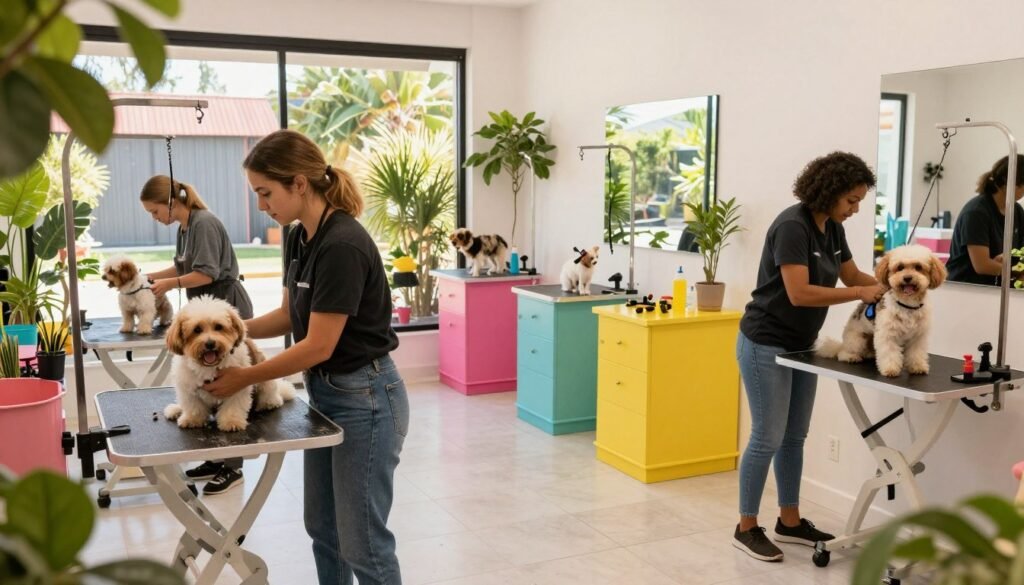
Your operation can be run from your home, with services performed at clients’ houses. It’s a classic service model with low startup costs and high demand.
Catering to the Growing Pet-Owning Middle Class
In South Africa, pets are increasingly seen as beloved family members. This humanization trend means owners are willing to spend on premium care.
They look for reliable, trustworthy people to handle their animals. Your service fills this crucial gap in the market.
This sector often remains strong even during economic downturns. People prioritize their pets’ well-being, making it a resilient commercial concept.
You can offer various tiers of service. Basic packages include walking and feeding.
Luxury options might involve specialized grooming or premium boarding facilities. Tailor your offerings to what local pet owners want and can afford.
Essential Services: Walking, Sitting, and Veterinary Transport
The core of your work involves daily, essential tasks. Daily dog walking provides exercise and companionship for pets left alone.
In-home pet sitting during holidays is a vital service. You feed, play with, and provide company for animals in their familiar environment.
Basic grooming like bathing and nail clipping is another popular offering. Many owners prefer a mobile service that comes to them.
Providing transport to vet appointments is a huge help for busy clients. It ensures pets get to their check-ups on time.
Regular photo and text updates are key to building trust. They give owners peace of mind and show you are attentive.
Getting certified in pet first-aid is a powerful differentiator. It demonstrates a serious commitment to animal safety and well-being.
To get started, your initial costs are manageable. You’ll need basic grooming tools, liability insurance, and a budget for marketing.
Building a local reputation is everything. Start small by offering services to neighbors and friends.
Use their testimonials to attract more clients. Hyper-local marketing works very well for this type of venture.
Join community Facebook groups and post your offerings. Place flyers at vet clinics and pet supply stores.
Consider partnerships with local pet stores for referrals. Your success relies on reliability, a genuine love for animals, and excellent customer service.
This is a rewarding way to build a sustainable operation. You provide a needed service while working with animals every day.
10. Agri-Processing and Specialty Food Product Business
Transforming South Africa’s rich agricultural bounty into shelf-ready specialty goods is a time-tested path to profitability. This venture takes abundant raw materials and turns them into consumer products with much higher value.
You create items for both local shoppers and international markets. The model builds on the nation’s farming strengths.
Adding Value to Local Produce (Rooibos, Macadamia, etc.)
Think of common crops and how to make them special. A simple raw material becomes a branded, packaged product people love.
For example, rooibos leaves can become flavored tea blends. Macadamia nuts are perfect for creating gourmet nut butter.
Biltong spice kits let customers make their own at home. Dried fruit snacks or marula oil for cosmetics are other great options.
This process significantly increases the price you can charge compared to selling raw ingredients. It also reduces waste from imperfect harvests.
You can begin very small. Use your home kitchen following local cottage food laws.
Sell your first batches at community farmers’ markets or through a simple online store. This tests demand without big investment.
As sales grow, you can scale up. Contract directly with farmers for a steady, bulk supply of quality produce.
The next step is renting time in a commercial kitchen. Later, you might invest in your own small processing facility.
Packaging is a critical part of the final product. Good design makes your item stand out on the shelf.
Navigating Food Safety Standards and Export Potential
Regulations are not optional in this industry. They protect your customers and your reputation.
For local sales, you need municipal health certificates. Your processing space must pass regular inspections.
If you make certain claims or products, the South African Health Products Regulatory Authority (SAHPRA) may be involved. Always check the specific rules for your item.
Implementing HACCP principles is a smart move. This is a systematic approach to identifying and controlling food safety hazards.
Mastering these standards is what allows you to access larger markets. It gives retailers and distributors confidence in your operation.
Exporting opens even more doors. Countries require phytosanitary certificates to prove your products are safe and free from pests.
You must understand the trade agreements South Africa has with other nations. These can lower or eliminate import tariffs for your goods.
Work with a freight forwarder experienced in food exports. They handle the complex logistics and documentation.
Your marketing should tell a powerful story. Highlight the origin of your ingredients and the farmers you support.
Conscious consumers want to know their purchase helps rural communities. Emphasize quality, authenticity, and the positive impact.
Success here depends on several factors. Consistent product quality is non-negotiable.
You must secure a reliable supply chain. Effective branding makes people remember and choose your product.
Most importantly, know the regulations inside and out. This knowledge turns a great food idea into a sustainable and respected venture.
11. On-Demand Tech Support and IT Services for Home Users
When a computer freezes or Wi-Fi fails, most people feel helpless. This creates a steady demand for patient problem-solvers.
The internet is essential for daily life and work. Yet, many lack the technical knowledge to fix common issues.
Your service bridges this gap perfectly. It turns frustration into a reliable, home-based operation.
This model addresses a persistent need with very low overhead. You solve everyday problems for a wide customer base.
Assisting with Connectivity, Hardware, and Software Issues
Your daily work involves fixing the tech headaches people dread. Start with home network setup and troubleshooting.
Slow internet causes major frustration. You can diagnose the issue and provide a clear solution.
Removing viruses and malware is another critical service. Clients need their devices to be safe and fast again.
Installing printers and new hardware upgrades are common requests. Many also need basic software training.
Your value comes from restoring normal function quickly. You give people back their time and peace of mind.
Subscription Models for Ongoing Support
For stable income, offer monthly or annual support plans. These create predictable revenue for your operation.
Plans can include a set number of support hours each month. Add remote monitoring for proactive maintenance.
Subscribers also get priority service when issues arise. This builds long-term relationships with your clients.
Many problems can be solved remotely using tools like TeamViewer. For hardware fixes, on-site visits are necessary.
This mix of remote and in-person work offers great flexibility. You can manage your schedule effectively.
Target your marketing to specific groups. Residential complexes and retirement communities often need this help.
Small home-based operations are another perfect audience. They rely on their tech but can’t afford a full-time IT person.
Key requirements are strong technical troubleshooting skills. Excellent customer service is just as important.
You must explain complex solutions in simple, clear terms. Patience is your greatest asset.
This is a classic service with enduring demand. It solves a persistent, everyday problem for countless people.
12. Profitable Business Ideas with Low Startup Costs
Launching your own venture doesn’t require a massive bank account or a warehouse full of inventory. Some of the most successful operations begin with little more than a skill, a laptop, and a solid plan.
This section bundles accessible models perfect for first-time founders. They let you validate a concept with minimal financial risk before scaling up.
The common thread is clear. Success relies more on effort, organization, and customer care than on large cash outlays.
Freelance Writing and Copywriting for SA Brands
Companies constantly need fresh content. This includes blog posts, website pages, and press releases.
Your primary asset is your ability to write clearly and persuasively. Leveraging SEO knowledge is a huge advantage for clients.
You can get started with just a reliable computer and an internet connection. Building a portfolio is your first practical step.
Create sample pieces that showcase your style and expertise. Offer your services to a few local companies at a discounted rate initially.
Platforms like Upwork and LinkedIn are excellent for finding your first clients. They connect you with brands actively seeking writing talent.
This model offers incredible flexibility. You set your own schedule and gradually expand your client base from your home.
Launching a Dropshipping or Print-on-Demand Store
This e-commerce model keeps your overhead remarkably low. You run an online store while a third-party supplier handles inventory and ships products directly to customers.
Tools like Shopify make setting up a professional website straightforward. You don’t need to manage physical stock at all.
For print-on-demand, suppliers like Printful create custom t-shirts, mugs, and posters only after an order is placed. The Shopify Collective feature also lets you source unique products from other stores.
Your main tasks are store design, product selection, and driving traffic. Marketing through social media is essential for attracting customers.
You’ll need to invest time in learning basic digital advertising. The financial risk, however, is minimal compared to traditional retail.
This is a powerful way to test product ideas without committing large sums of money. You can start small and scale based on what sells.
Starting a Cleaning or Errand-Running Service
This classic service venture addresses everyday needs with high demand. You can define your offerings clearly.
Focus on home or office cleaning. Alternatively, provide errand-running like grocery shopping or prescription pickup.
Pricing for cleaning services often ranges from $25 to $50 per hour. Your overhead costs stay very low.
The required startup investment is minimal. You need reliable transportation, a smartphone, and strong organizational skills.
Building a local clientele starts with referrals from friends and family. Place flyers in community centers or use local Facebook groups for advertising.
Excellent customer service is your best marketing tool. Happy clients will recommend you to others, growing your operation steadily.
Each of these paths leads to self-employment. Choose the one that best matches your personal skills, interests, and available time.
13. Senior Care and Assisted Living Support Services
As families seek reliable care for aging loved ones, a new opportunity emerges for empathetic entrepreneurs. This venture provides essential support, allowing seniors to live safely and comfortably in their own houses.
It addresses a profound social need across South Africa. Many older adults wish to age in place, but their families cannot always provide daily help.
Meeting the Needs of an Aging Population
Demographic trends show a clear gap between the need for care and available facilities. Formal assisted living options are often limited or costly.
This creates strong demand for in-home support. The scale of this sector is significant globally.
For example, 63 million Americans are caregivers. A full 94 percent care for adults, many aged 85 and older.
Similar patterns are developing locally. Your operation fills this vital space in the community.
You don’t need a formal healthcare background to begin. Many seniors simply require help with everyday tasks and companionship.
Offering Non-Medical Companionship and Daily Task Assistance
Your core services focus on non-medical support. This includes meal preparation and light housekeeping.
You can provide medication reminders and transportation to appointments. Most importantly, you offer social interaction and friendship.
Loneliness is a serious issue for many older people. Regular visits greatly improve their quality of life.
Empathy, patience, and reliability are your most important skills. First-aid certification is also advisable for safety.
You can start this as a one-person operation. Begin by offering your own time as a caregiver.
As demand grows, hire additional vetted companions. Building trust with families is absolutely critical.
Conduct thorough background checks on all staff. Use clear service agreements and maintain regular communication.
This is a meaningful way to build a sustainable venture. You provide essential support that fosters independence.
Families gain peace of mind knowing their relatives are in good hands. Your work makes a real difference every day.
14. Urban Farming and Vertical Gardening Consultancy
Growing food upwards, not outwards, unlocks potential in the most crowded city neighborhoods. This venture turns gardening skill into a consultancy that promotes sustainability and local food security.
You help individuals and communities cultivate fresh produce in limited spaces. It’s a powerful small business model with strong social impact.
Promoting Food Security in Townships and Suburbs
Your core service is education and system design. You teach people how to grow their own vegetables.
Design customized setups for rooftops, balconies, and small yards. Hydroponic systems are perfect for water-scarce areas.
Community garden plots in townships foster collaboration and shared harvests. This work directly empowers neighborhoods to produce their own nutritious food.
Your training sessions provide hands-on experience. Clients learn about soil, planting seasons, and pest control.
You can sell starter kits with seeds, soil, and simple instructions. This creates an additional revenue stream from your knowledge.
The social value of this work is immense. It builds resilience and green economies in urban areas.
Supplying Restaurants and Farmers’ Markets
The same expertise can fuel a production operation. Use vertical farming techniques to grow high-value crops.
Chefs and local markets seek hyper-local herbs, microgreens, and salad greens. These products command premium prices.
This taps directly into the growing “locavore” movement. Consumers and restaurants prioritize fresh, locally sourced ingredients.
You can supply a consistent harvest to a few key customers. Start by approaching chefs who value quality and story.
Selling at weekend farmers’ markets builds your brand. It also provides direct feedback from your end customers.
This side of the venture requires more investment. You’ll need growing systems, seeds, and possibly a small greenhouse.
Your startup costs are low for the consultancy part. Moving into production requires more money and tools.
Success demands deep horticulture knowledge. Understand South Africa’s unique growing conditions and seasons.
Your ability to educate and inspire clients is crucial. This is more than a service; it’s a way to change local food systems.
You can begin by offering design consultations from your home. Use social media to share success stories and attract your first clients.
Create useful content about container gardening. A simple website can showcase your services and products.
This business idea has multiple paths to revenue. You build a sustainable operation while making a tangible difference in your community.
15. Specialized Courier and Logistics for E-commerce
The final step in an online purchase—delivery—is where many e-commerce transactions face their biggest hurdle. Standard postal options often lack the speed, care, or communication that modern shoppers and sellers expect.
This creates a prime opening for a specialized courier operation. You provide a premium logistics service tailored to South Africa’s growing digital marketplace.
Your venture directly addresses a critical bottleneck. It ensures products arrive safely, on time, and with full transparency.
Solving the “Last Mile” Delivery Challenge
The “last mile” refers to the final leg from a distribution point to the customer’s door. It’s the most complex and costly part of the supply chain.
Your service excels here by offering fast, tracked, and flexible options. You can provide specific delivery time windows that fit the recipient’s schedule.
Superior customer communication is your key differentiator. Real-time GPS tracking links and proactive updates build immense trust.
This reliability turns delivery from a worry into a competitive advantage for your clients. They can promise a better experience to their own customers.
Handling Fragile, High-Value, or Perishable Goods
This is where you define your niche and justify premium fees. General couriers are not equipped for sensitive items.
Your expertise covers artisan foods, fresh flowers, electronics, and artwork. Medical supplies represent another major sector, with the global healthcare courier industry valued at nearly $63 billion.
These products demand careful handling, climate control, or security protocols. You become the trusted partner for items that cannot afford to be damaged or delayed.
Specializing in fragile or perishable goods taps into a high-value, high-demand market. Online sellers of these products actively seek reliable logistics partners.
You can launch this operation with a single reliable vehicle. Start as the owner-operator to manage costs and learn the routes intimately.
As demand grows, scale by adding more vehicles and hiring careful drivers. Building partnerships is crucial for steady work.
Connect with local online retailers, art galleries, florists, and specialty food producers. They need a courier they can depend on for their reputation.
Technology streamlines everything. A simple website allows for easy booking and quote requests.
Use GPS tracking apps to monitor parcels. Maintain professional communication with both senders and recipients throughout the process.
This venture solves a clear pain point for a growing sector. You enable e-commerce to flourish by ensuring the product arrives in perfect condition.
Your service commands higher fees because it delivers higher value. It’s a scalable model built on trust and specialized skill.
Conclusion: Taking the First Step Toward Your South African Business Dream
The path to a successful venture is paved with careful planning, not just a perfect concept. A solid business plan, deep knowledge of your market, and a commitment to start small are your true foundations.
Long-term profit requires constant innovation. Adapt your services and marketing to new trends, using tools like social media to connect with clients.
Review the ideas presented and select one that matches your skills. Then, get started by drafting your plan. Your unique drive is the key ingredient for your own success story.
FAQ
What are the most important things to consider before launching a venture in South Africa?
Before you get started, focus on three key areas. First, understand the legal structures and how Broad-Based Black Economic Empowerment (B-BBEE) might affect your plan. Second, research funding options from institutions like the Small Enterprise Finance Agency (SEFA). Finally, spend time identifying your target market and what makes your offer uniquely valuable to them.
Which concepts have low startup costs for new entrepreneurs?
Several profitable paths require minimal initial investment. You can begin freelance writing or copywriting for local brands using just your skills and a computer. Launching a dropshipping or print-on-demand online store eliminates holding inventory. Starting a local cleaning or errand-running service mainly needs basic supplies and marketing to find your first clients.
How can I address South Africa’s power challenges with a new venture?
Renewable energy solutions for homes and small to medium enterprises (SMEs) are in high demand. You can build a company that addresses load-shedding by installing solar panels and battery backup systems. Offering flexible financing models makes these systems more accessible, while providing reliable maintenance creates recurring revenue.
Is digital marketing a good field for a small agency?
Absolutely. Many small, medium, and micro enterprises (SMMEs) need help navigating the digital world. A niche agency can assist local owners with mastering search engine optimization (SEO) and platforms like Facebook and Instagram. Your real value is in creating culturally relevant content that resonates with the South African market.
What does it take to start an eco-tourism experience company?
This idea leverages the country’s incredible natural beauty. Success hinges on building strong partnerships with local communities to ensure authentic and sustainable experiences. You’ll also need the right gear and the necessary safety certifications to operate professionally and protect your customers.
How can I tap into the growing demand for specialized pet care?
Cater to the expanding middle class of pet owners by offering essential services. This includes daily dog walking, in-home pet sitting, and reliable veterinary transport. As you grow, you can expand into premium offerings like luxury boarding or mobile grooming, building a loyal client base.